
3D Motion Design / Simulation / Look Development
Project
Graduation Project · Solo
Period:
April 2024
Role:
3D
Art Direction
Compositing
Tools:
Cinema 4D
Redshift
Photoshop
00 — Overview
01 — Objective
Create a cabin for shared family time
02 — Design Criteria
Connect facing seats, a central object, and familiar materials
03 — Deliverables
Interior concept · Lantern Hub · 3D visualization
01 — Context
When the wheel goes silent, what fills the cabin?
Autonomous cabin design often optimizes for convenience: less driving, more personal media, more isolated screens.
By 2040, the car can easily become a moving room where four people sit together without really sharing attention. HYNION begins with the opposite question.
What if the cabin made family attention easier to gather?
The project borrows from the campfire: warmth, a shared center, and an object familiar enough to invite conversation inside a technological future.

02 — Approach
01
The Evolution of Family Connection
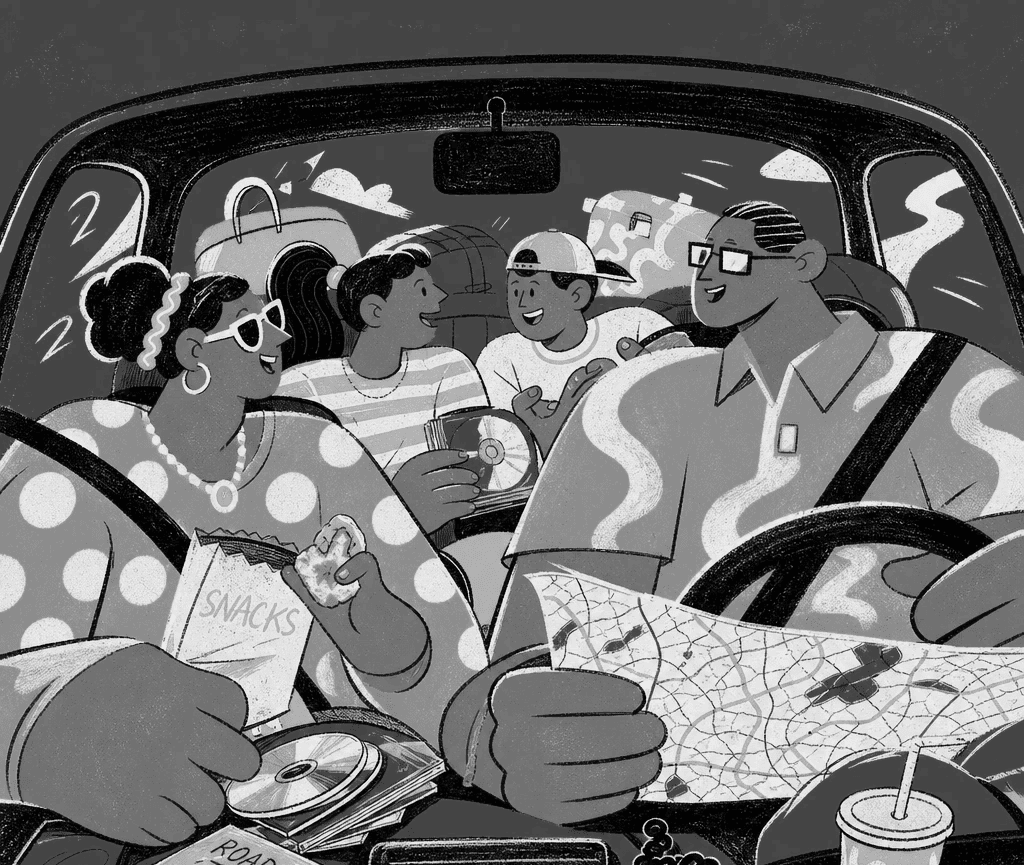
1990s
Together
The private car once made family travel a shared ritual. Routes were discussed, maps were read together, and the journey happened through conversation as much as movement.
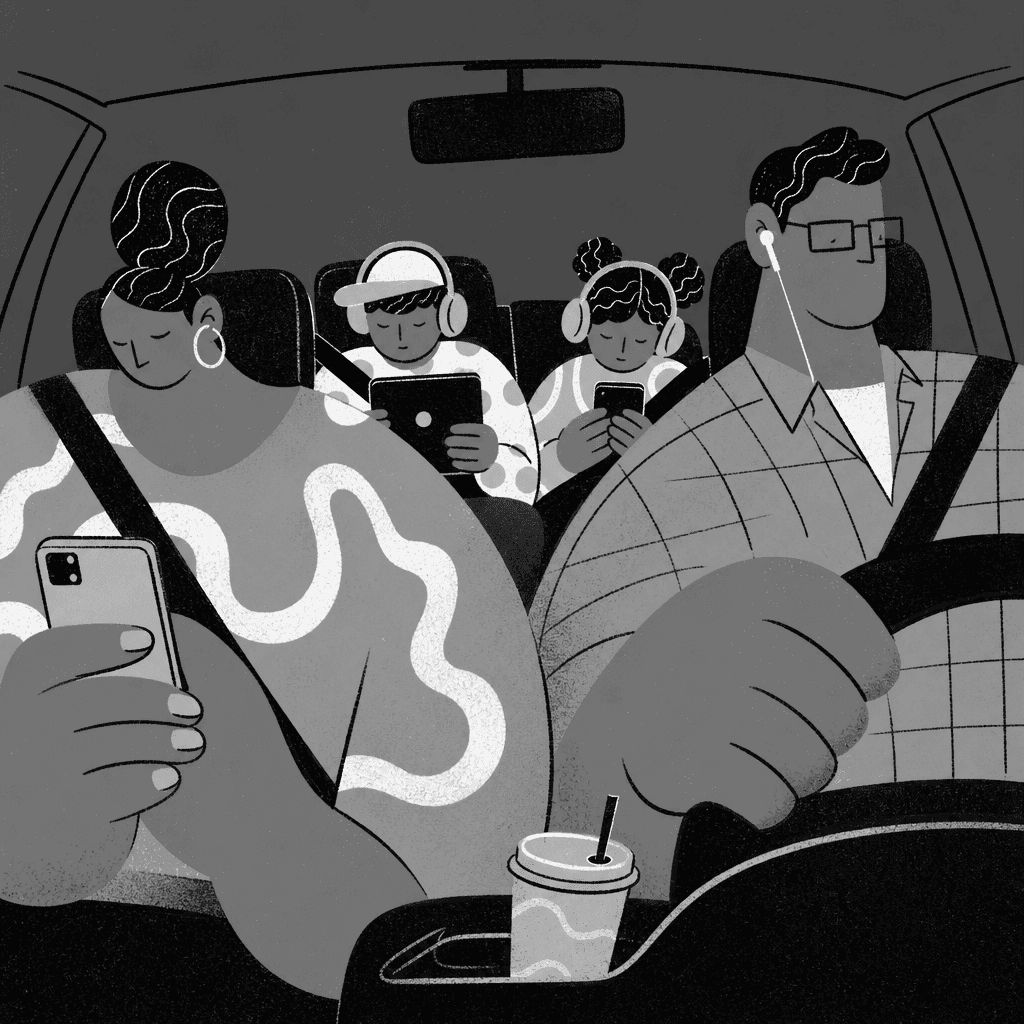
2020s
Disconnected
Personal devices entered the cabin and divided attention. Family members still share the same room, but each person follows a separate stream of sound, image, and message.
2040s
Even more separate?
Autonomy removes the driver from the road, but it can also remove the last shared focus. Without another center, the cabin becomes four private media seats in one moving shell.
02
Developing the Lantern Hub
03
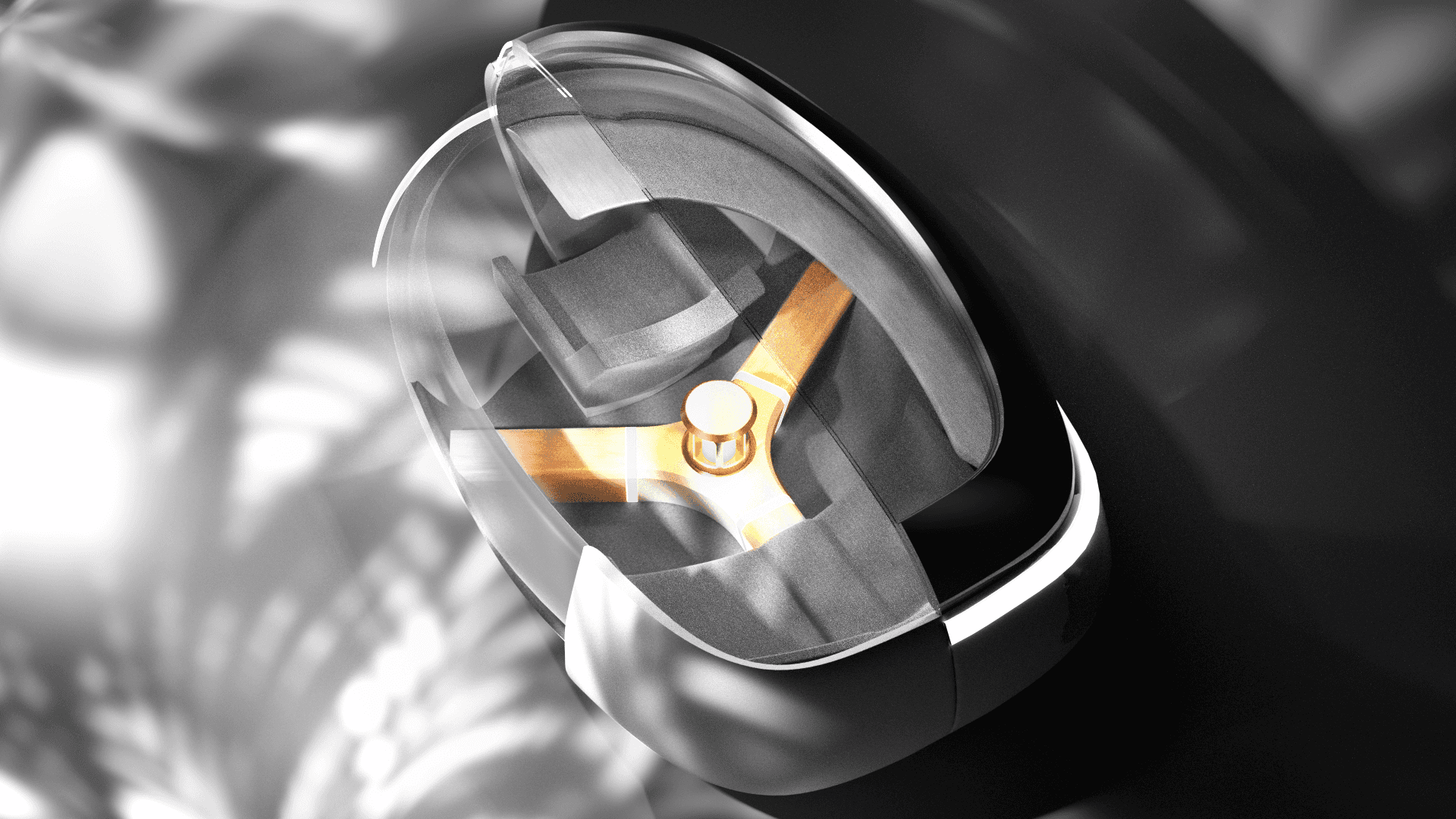
Choosing materials and lighting
03 — Design Decisions
Key decisions and why they mattered
01 — Seating and spatial focus
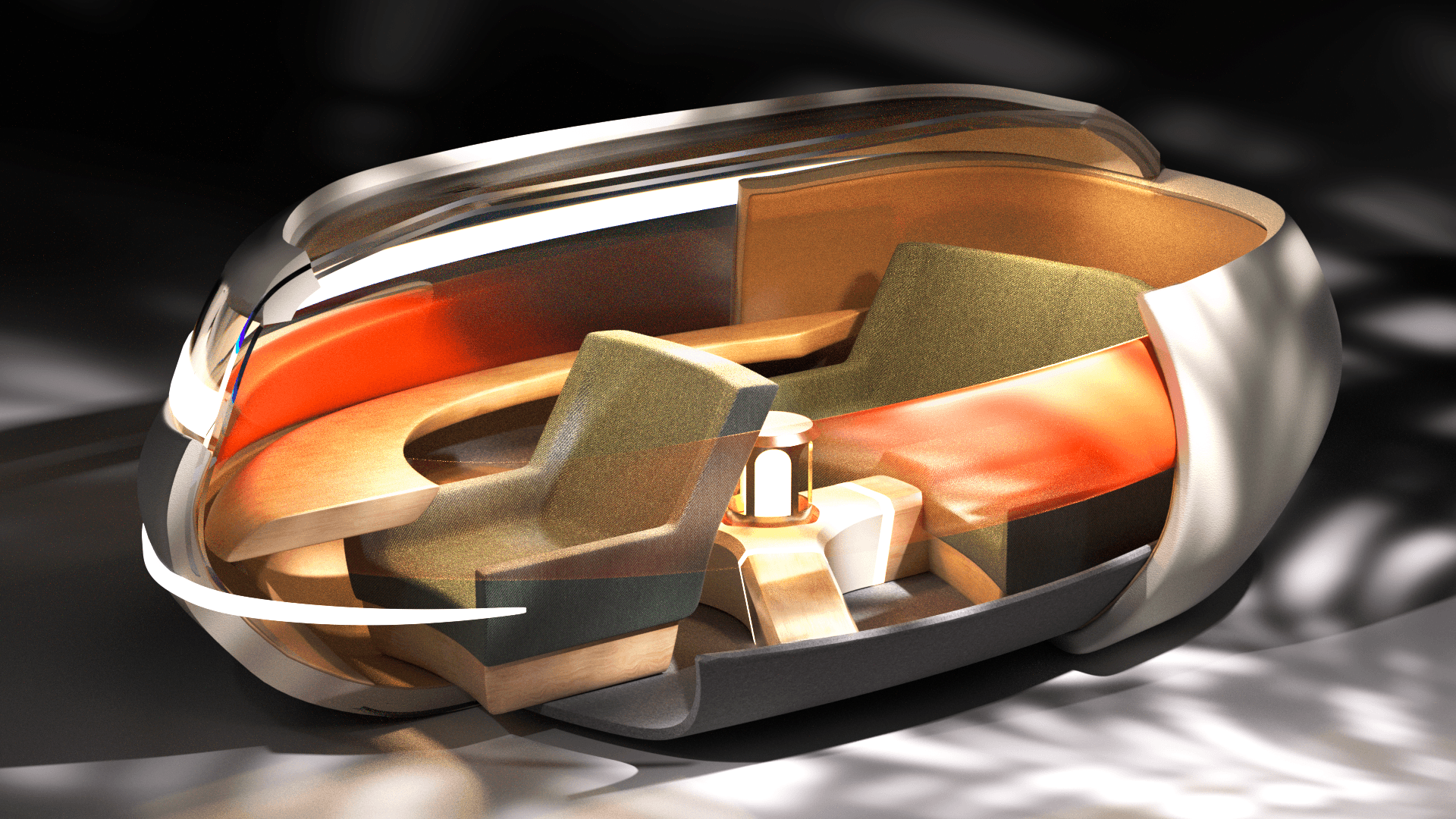
Arrange the cabin around the Lantern Hub
The relationship between the seating and central object supports the idea of time spent facing one another.
Design Decisions · 01
Soft inside,
precise outside.


02 — Materials and lighting
Bring campfire warmth into the cabin through wood, warm light, and orange accents
The material and color palette connects the campfire-inspired form to the goal of bringing families together.
Wood adds a familiar tactile quality, while warm light and orange accents give the shared space a welcoming atmosphere.
Design Decisions · 02
03 — Outcome
Outcomes and learning
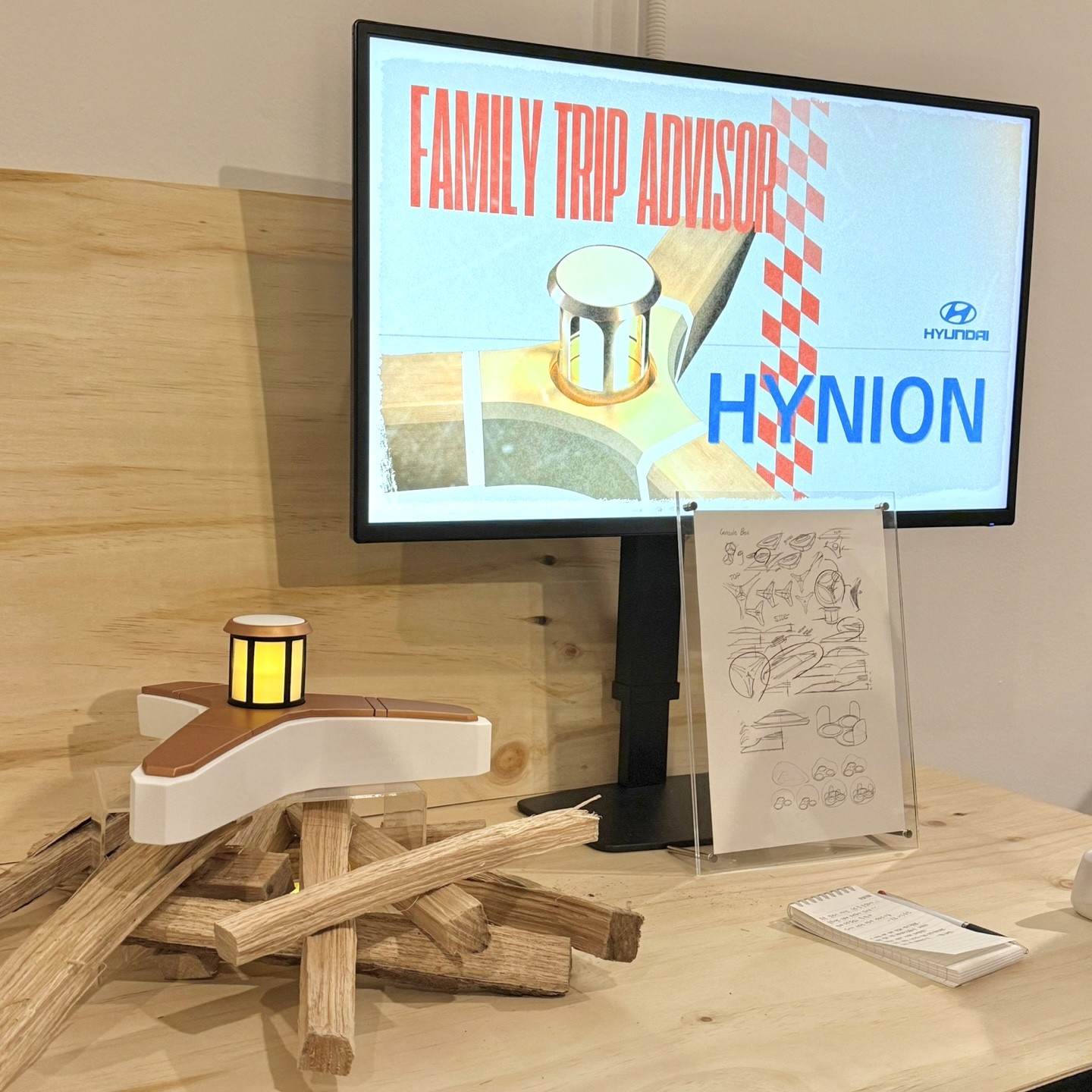
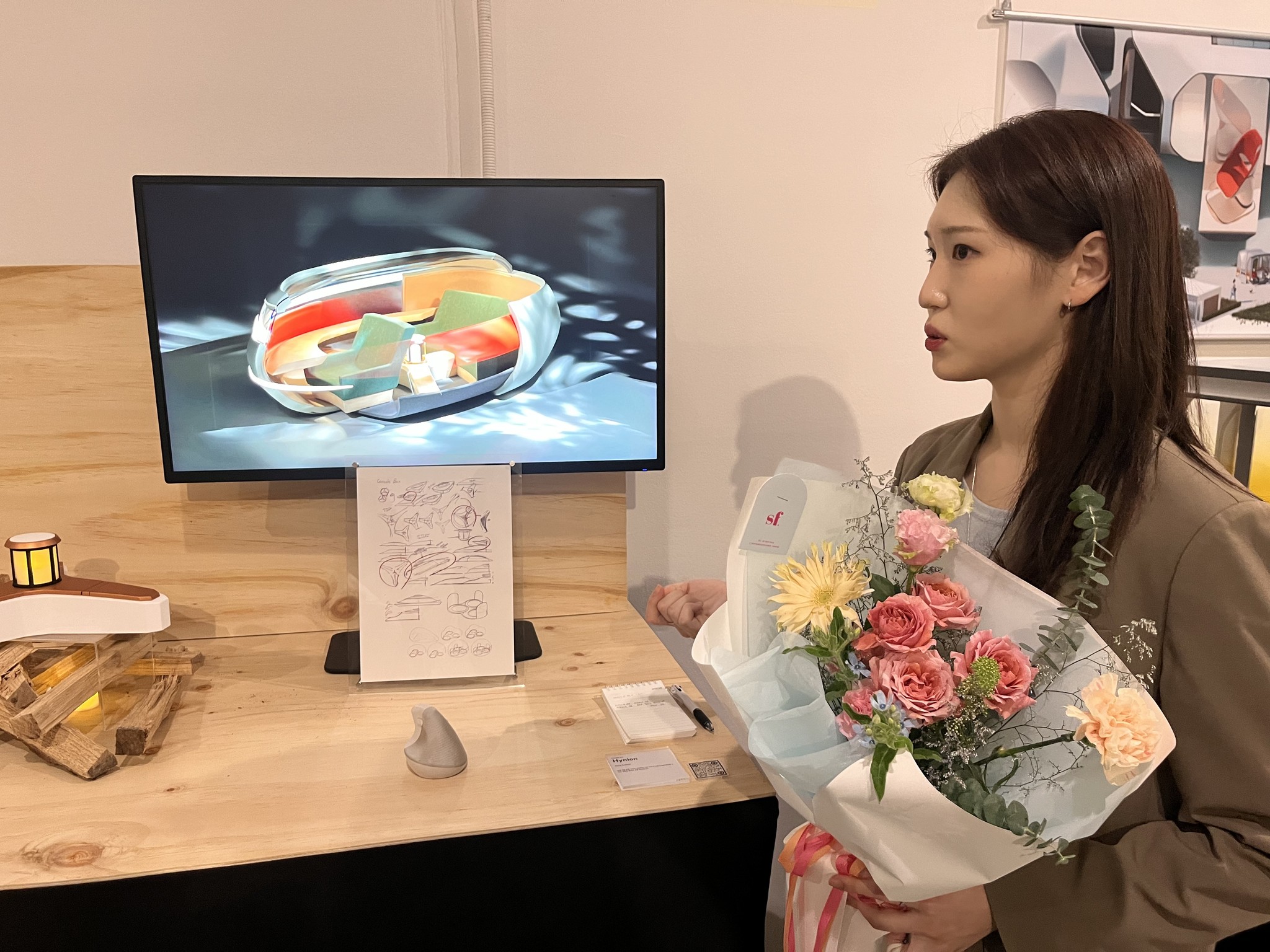
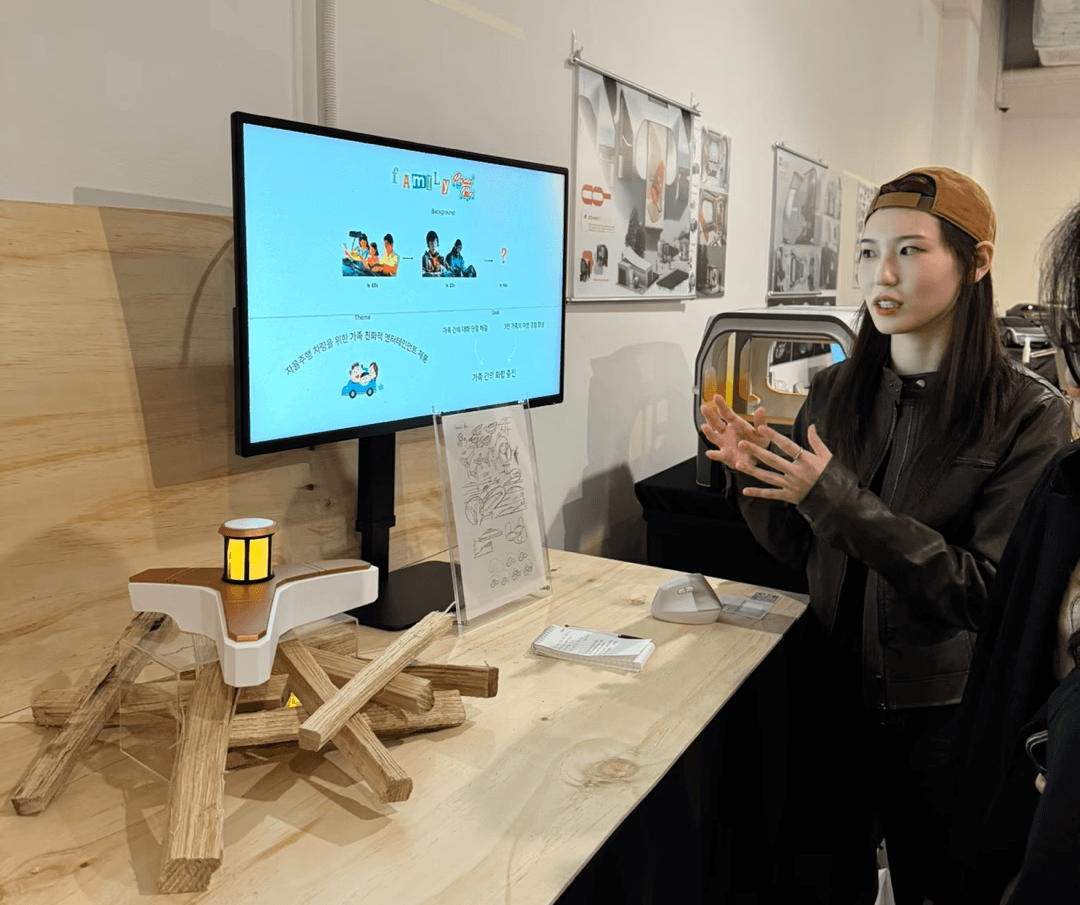
I developed an autonomous vehicle interior concept around the Lantern Hub, bringing together seating, materials, and lighting, and exhibited it at the 2024 graduation show.
During the exhibition, I presented HYNION to designers from Hyundai Motor, who described its consideration of families as a fresh approach.
Learning
Defining the kind of time passengers would share gave me a basis for choosing seating arrangements and materials.
I learned to use familiar forms and textures to make a future mobility concept easier to understand.
Next Project
Hublot Ver.1
→
Copyright © Sydney Hong 2026
Try
Framer
for Free!